Friday, February 5, 2010

I really like the 21st century!


Comics Buyer's Guide~March 11, 1988~pg 18

Today I was going through some old file boxes in search of something from the '80s that I thought might be helpful regarding a plot point for "Something More."

(Haven't found it...yet.)

But the page above, a very old and yellow page, fell out of a sketch book that contained ideas and thoughts from the era roughly covering TOTB # 9 (now in Wahoolazuma!).

This page from COMICS BUYER'S GUIDE really, truly is from a different day and age.
An era when we as alternative cartoonists, working in the independent press, really didn't have a lot of options and clear pathways to getting the word out about our titles.

At the time, if memory serves me correctly, there were basically three vehicles that had a wide circulation amongst comic book consumers: CBG, Amazing Heroes, Comic Journal.

They controlled the flow of publicity that was released from publishers and creators. They assigned and edited the only reviews that had the wide readership. If the folks at the top of those publication's management flow charts liked you--you got ink.
If they didn't like you--you got nada.

In some cases, it didn't even matter if your work was good or not; if they didn't like your publisher, they didn't like your book.

So, it was important to go around this editorial bottleneck and do your best to appeal directly to the consumer as efficiently as one could muster.

Try to grab the reader's attention as quickly and efficiently as possible, make your sales pitch, and hope that something seeped into their awareness before they turned the page. The goal being that maybe the next time your book was on sale, that person might remember something and pick it up, thumb through it, and let the comic book itself try to close the sale.

The passage of time between glimpsing the ad and the book appearing on sale might be weeks and weeks. That's a very long time to retain something. Nowadays, one reads a blog about an interesting book, hits a link, and can buy the book within mere moments of reading about it.
I do it all the time.

Back to the page above, this particular Beanworld ad was one of my favorite from the era.

Simple.
Uncluttered.
To the point.
And small.
(I couldn't afford much in the way of ad inches.)

I remember how pleased I was to have it appear on a page about the Turtles getting the keys to their manhole cover in front of the Toy Building during 1988 Toy Fair (not that I even remotely understood the significance of the Toy Building or Toy Fair back then in 1988.)

Today, we clearly live in a far superior age for the distribution of information.
Sure, there are the top bloggers in the field, and it is important for them to link to whatever it is that one is announcing or promoting.

Does it sting when you get overlooked by top bloggers for whatever reason?
Yes.
Is it the end of the world?
Hardly.

You just do it yourself by social networking.
Friend by friend, connection by connection, link by link.

As the amazing Douglas Rushkoff so eloquently put it in "Get Back in the Box":

“Just as the successful business person learns how to provide social currency through which customers can interact, the successful person – the New Renaissance Person – defines himself not just by his abilities, worth, or possessions, but by his connections to others… A person is not the sum total of the abilities he contains, but the totality of his connections. A person’s abilities are extended to include those of all the people he can access… You are your address book.”

We no longer have to hard sell anything in a blinding flash.
We can engage our readership in conversations about things that are mutually satisfying to all parties.

I really like the 21st century!


Thursday, February 4, 2010

The Dresden Codex @ BibliOdyssey!


left: original right: 1933 attempt at re-mastering

As I've written many times before, one of my favorite blogs is BibliOdyssey. Yet again, here is a really good example of why I am so fond of Pecay's site.

"The seventy four pages are sewn together producing an eleven foot document which was originally folded up between protective wooden covers bearing engraved jaguars"


"The basic colors used from vegetable dyes for the codex were red, black and the so-called Mayan blue."


It's in less than mint condition, the fig bark paper pages are flaking, the color is faded, (if it had staples they'd be all rusty) but just like a crummy ol' reader copy of a classic comic, you can still perceive the aura of power and glory radiating from its pages. (I am incapable of looking at stuff like this and not thinking of Jack Kirby. )

I know I'm going to be studying the visuals today, soaking up what I can!
The Mayans sure did know how to make comics, didn't they?


Wednesday, February 3, 2010

LOST!


Panopticon~Jeremy Bentham ~1785

Round and round we go.
Circles of ash.
Loops of time.
And the loophole found by Jacob's Adversary.
.
That usage of the word "loophole" keeps rattling in my head.
So what was the original definition of loophole--the one that might be used in the time of a tall ship with billowing sails approaching The Island?

A little bit of offense while playing defense.

Looking from the inside out.

Once again, that put me in mind of the historical Jeremy Bentham's Panopticon . A prison designed to allow jailers to observe the inmates without the prisoners being able to tell whether they are being watched, thereby conveying what one architect has called the "sentiment of an invisible omniscience."

Ah, LOST, old friend, welcome back for one grand last ride!

Monday, February 1, 2010

I've met the Clangers and nothing will ever be the same!


I woke up the other day to an email from Neil Gaiman.

In my world (and I suspect everyone else's) any day that begins with an email from Neil is a prime indicator that the day is going to be an extraordinary day.

And it was.

Neil wrote:

Larry,

Has anyone ever pointed you at
Clangers, the UK TV series?

For years I've been wondering what Beanworld sort of reminded me of, and this evening watching a documentary it suddenly came into focus, and I thought, Clangers....

In a weird, upside down kind of way, mind....

N

I checked it out and watched the first Clangers that came up on YouTube: The Intruder.

I was immediately intrigued....then charmed....and by the introduction of the Music Trees I was Enchanted For Life!

I watched one episode after another.

My favorites being Music of the Spheres,
Music of the Trees,
and
The Tablecloth.

I wrote back to Neil:

No one has EVER mentioned the Clangers before.
Up until today, I've never HEARD of the Clangers, but now I've been thoroughly charmed and totally addicted!

And I am.

The Clangers were shown on BBC from 1969 to 1972. "The series was made by Smallfilms, the company set up by Oliver Postgate (writer and narrator) and Peter Firmin (modelmaker, animator and illustrator). Firmin designed the characters and his wife knitted and 'dressed' the Clangers. Music – which was often part of the story – was by Vernon Elliott."

The main characters are Major Clanger, Mother Clanger, Granny Clanger, Small Clanger, and Tiny Clanger. And then there is Soup-Dragon, Iron Chicken and the Froglets.

The little movies are described on Wikipedia as being "short stories about a family of mouse-like creatures who live on, and in, a small grey planet in dark space. They speak in whistles, and eat green soup harvested by the Soup Dragon."

The Clangers website says:

"A Clanger’s life is far from dull, theirs is a world where music grows on trees and notes, when collected may be used to propel space borne craft. It is a place where the most unexpected things can happen and usually do.

The problems and situation that arise, or perhaps arrive, in their world are of course, much the same as ours but as their circumstances are so different the ways they have of dealing with them are different - original, unexpected and often profoundly sensible."

Yeahhhhhhh...that sounds rather familiar, doesn't it?
And like Beanworld, there is a lot of emphasis on food!
Amazing stuff like Blue String Pudding and Soup Wells.

No need for me to blather on like and idiot...go see for yourself.

As Neil and I communicated back and forth on the particulars of my Clangers driven enlightenment, I told him that one of the extra-special reasons I found the Clangers so personally awe inspiring was : the Clangers have no mouths.

To digress a bit, anyone who has ever asked me about the possibility of Beanworld migrating to other media have generally heard me say something like:

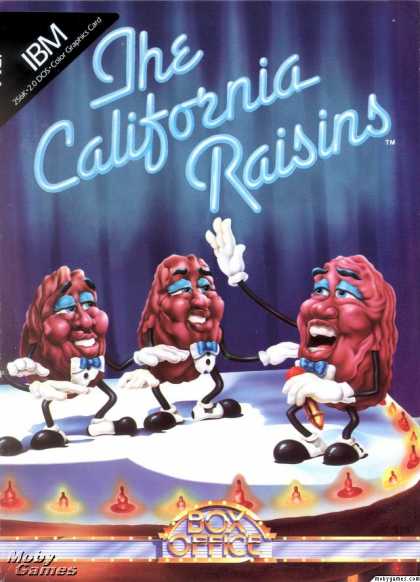
"I'm game as long as whoever is considering it understands that the Beans have no mouths. Beans with mouths don't live in the Beanworld. Bean-like creatures with mouths are Veggie Tales, California Raisins, or those-two-worded-plush-doll-usurpers-from -over-the-sea-that-I-am-obligated-to -peacefully-co-exist-with. Beanworld can never have Beans with mouths!

Now that I've met the Clangers I recognize that one potential solution could be a narrator. Something to seriously ponder when (and if) the day ever comes when I'm told "But the audience won't understand it if they talk and don't have mouths"

As Cory always points out, no one was confused Dug the Dog while watching UP.
Dug did have a mouth but it didn't move as he talked.

As Neil wrote later:
And yes, the Clangers really did solve so many problems that you might get from Beanworld, including simply the problem of going "but this is too weird for the world?" and no, it's not.

He's right.
It's not.

I summed this all up when I wrote back:

"Meeting the Clangers has been is a game-changing/mind-blowing-experience for me and how to strategize negotiating with the Powers of the Entertainment Omniverse....something I haven't really been to keen on lately. Really cannot express how much this day has been appreciated here.

Neil's response was simple and to the point:

Dear Larry,
I made you happy!
This made my day.
Neil

And that, my friends, is a hell of a way to end a day!
Thanks, Neil!